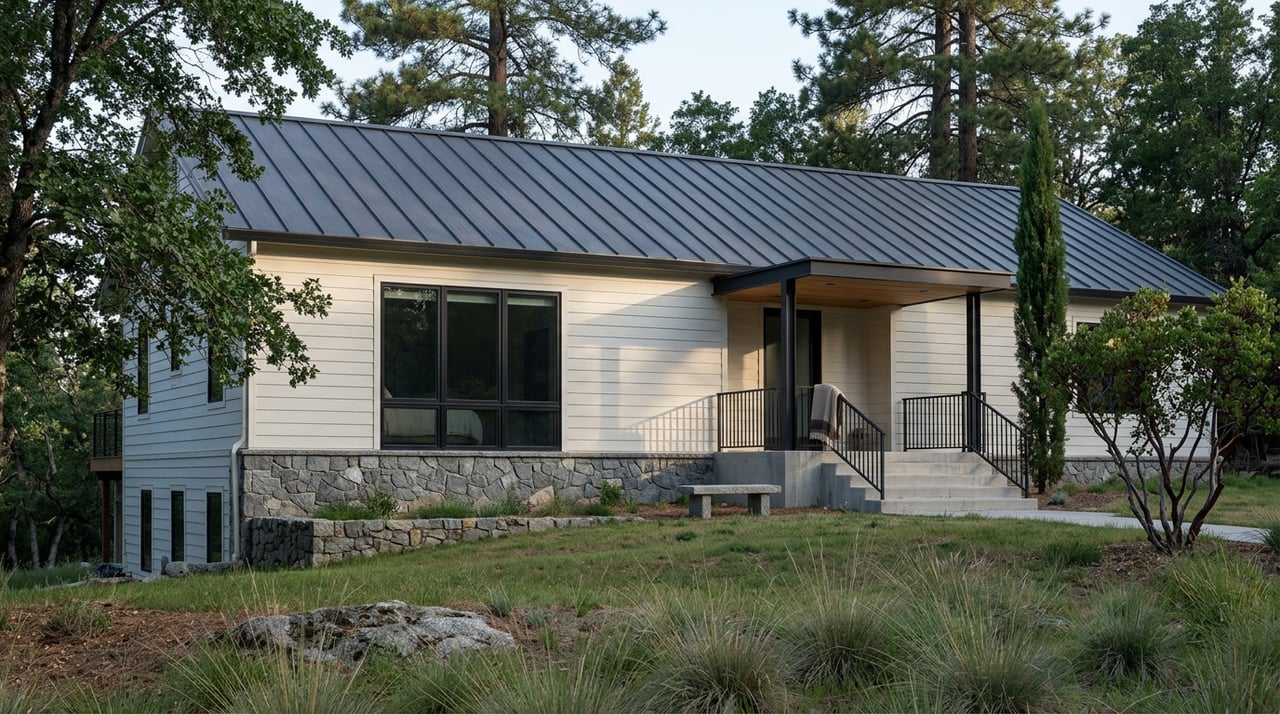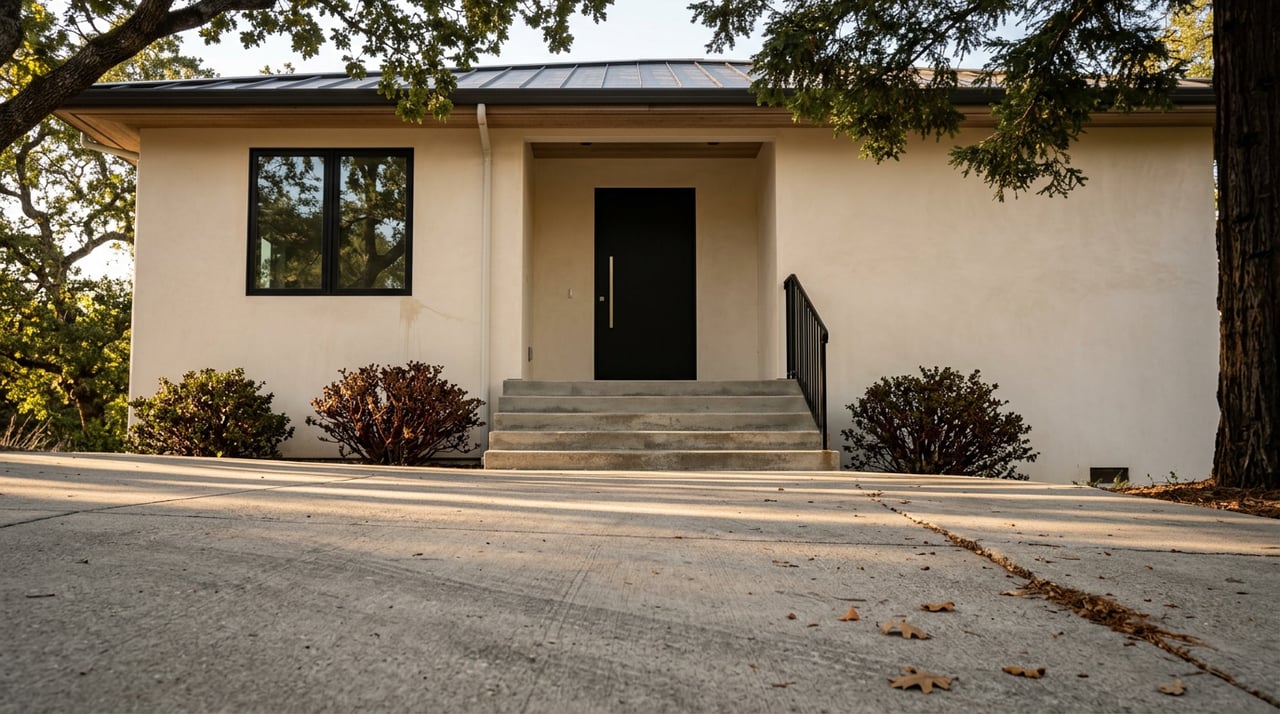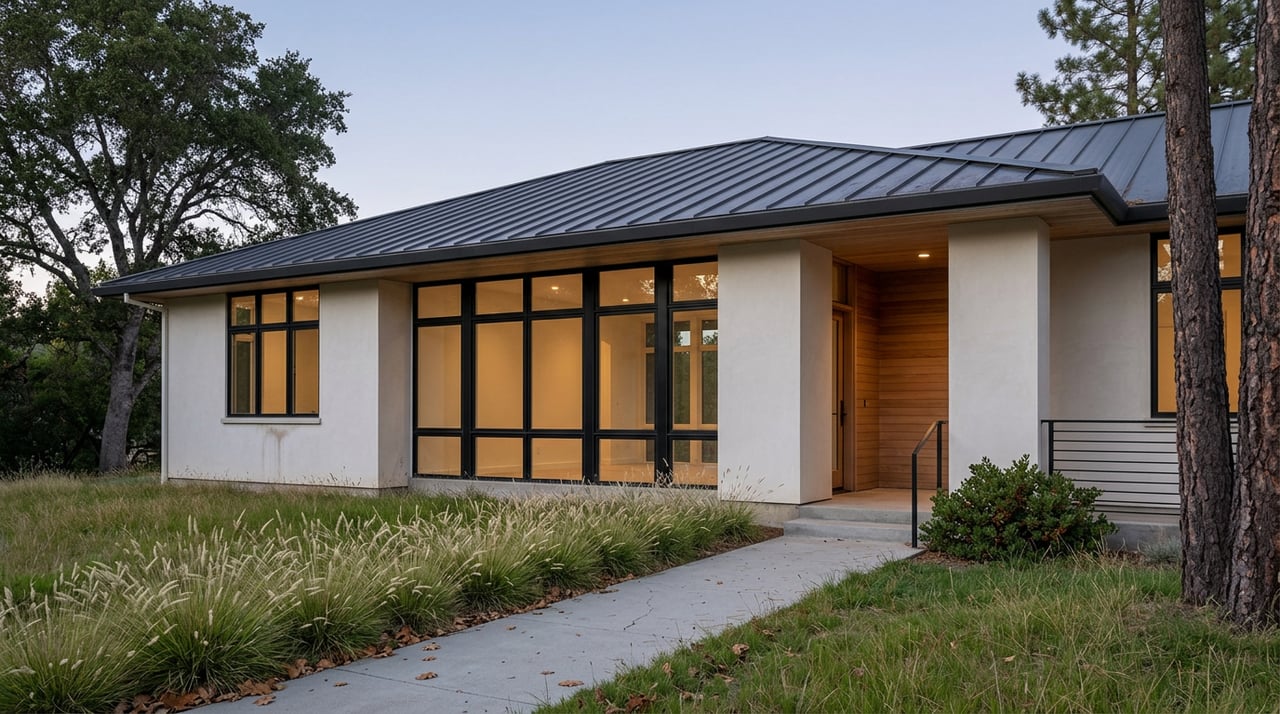
Scroll listings in Clovis and Oakhurst on the same afternoon and you'll notice something that looks like a bargain: the headline numbers barely differ. A three-bedroom home in Clovis and a three-bedroom home on an acre outside Oakhurst can list within a few percentage points of each other. For a Fresno or Clovis buyer weighing a move to the foothills, that convergence reads like permission. The mountains got affordable. Why not go?
The problem is that the sticker price is the least stable number in this comparison, and the costs that actually separate these two markets never show up on the listing page at all.
The number that looks like parity
As of August 2026, Oakhurst homes were listed at a median price of roughly $487,000, running about $249 a square foot, with homes spending a median of 102 days on the market. Clovis, over the three months ending June 2026, sold at a median of $474,000, with homes moving in a median of 39 days. Two different measurement windows, two different cities, landing within about three percent of each other.
That parity falls apart the moment you split Clovis into its own submarkets. Old Town and downtown Clovis hold the oldest housing stock and the lowest entry prices. Central and northwest Clovis are established neighborhoods with mid-range pricing. The northeast corridor, mostly the 93619 ZIP code, is where the newest and largest homes sit, in master-planned communities like Harlan Ranch, Loma Vista, and The Ranch at Heritage Grove. As of June 2026, that ZIP's median home value ran about $614,000, roughly $140,000 above the citywide figure. One lender's own market guide puts it plainly: a single neighborhood's median can swing month to month because it's built on a handful of sales, so one high-end closing pulls the whole number up.
So "Clovis" isn't one price. And neither, really, is "Oakhurst." What's worth comparing isn't the median. It's what each dollar is actually financing once you own the place.
| Oakhurst (Aug 2026) | Clovis (2026, by submarket) | |
|---|---|---|
| Median price | ~$487,000 listed | ~$474,000 citywide sold; ~$614,000 in newer 93619 developments |
| Typical days on market | 102 | 39 |
| Wildfire exposure | Nearly all parcels carry some level of exposure | Roughly a third of parcels carry some level of exposure |
| Recurring cost not on the price tag | Wildfire insurance, well/septic upkeep | Mello-Roos special tax in newer subdivisions |
The liquidity gap nobody prices in
Days on market isn't just a curiosity for sellers. It's a proxy for how easily you could get out if your plans changed. At 39 days, a Clovis home is close to finding a buyer within six weeks. At 102 days, an Oakhurst home is taking closer to three and a half months, and that's the citywide median, which means some listings sit considerably longer. If you're financing a move you might need to unwind in three years, that gap is a real cost, even though it never appears in a mortgage calculator.
The tax that expires, and the one that doesn't
Here's the part of the comparison that actually explains the price gap between old and new Clovis, and it has a name: Mello-Roos.
Homes built after 2000 in master-planned communities, which describes most of the 93619 corridor, are very likely to carry a Mello-Roos special tax, a Community Facilities District assessment that finances the roads, schools, and infrastructure a new subdivision needs before regular property tax revenue can cover it. It is not based on home value. It's typically calculated by square footage or lot size, and it shows up as its own line item on the county tax bill. Typical amounts run from around $360 a year in older, smaller districts to more than $10,000 in large newer developments, with most buyers in active districts paying somewhere between $1,200 and $6,000 annually. In CFD-heavy ZIP codes, the effective property tax rate, base plus Mello-Roos, can reach 1.5 to 1.7 percent of purchase price, compared with 1.1 to 1.3 percent in areas without it.
The part buyers miss: it expires. Most Mello-Roos bonds are structured to run 20 to 40 years from formation, and the tax disappears once the bond is retired. It's also generally not federally deductible, and it's disclosed in the Natural Hazard Disclosure report, so a buyer can and should look it up by parcel number before writing an offer.
Now compare that to what an Oakhurst buyer is financing instead.
- Wildfire insurance. Statewide, a standard HO-3 policy in a non-wildfire ZIP runs roughly $1,400 to $2,400 a year in 2026. In Sierra foothill and mountain wildfire zones, that number commonly runs $5,000 to $25,000 or more, frequently structured as a California FAIR Plan fire-only policy stacked with a separate difference-in-conditions wrap for everything the FAIR Plan doesn't cover. Neighboring Mariposa County posted the highest median homeowners premium in the state in 2024, at around $3,700 a year, and that was before the rate increases that followed. Allstate was approved for a 34 percent average increase in May 2026. State Farm's 17 percent interim increase was upheld in a March 2026 settlement. This is not a cost that expires. It renews every year, and the direction has been up.
- Well and septic upkeep. Existing homes already have a well and septic system in place, but if you're buying acreage to build, or replacing a failing system, current guides put a straightforward well and septic package at roughly $10,000 to $26,000 combined, with engineered systems on difficult soils running $15,000 to $50,000 or more. Madera County's Environmental Health Division handles the permitting for both, and its Water Well Program is the place to confirm what a specific parcel requires before you commit.
Put side by side, the pattern is almost a mirror image. Clovis's newest neighborhoods carry a known, disclosed, expiring tax that funds public infrastructure. Oakhurst's foothill parcels carry a variable, non-expiring insurance cost driven by brush conditions and distance from a fire station, plus, for undeveloped land, a one-time but sizable site-development bill. One is a line item you can look up before closing. The other is a quote that changes with the market and the year.
The 45 miles in the middle
There's a third cost that shows up in neither city's median: the drive. Clovis and Oakhurst sit about 45 miles apart on Highway 41, roughly 54 minutes each way, with the small town of O'Neals sitting almost exactly at the halfway point. For a buyer trying to decide between a foothill purchase and staying in the valley, that's the actual toll on weekend life, on errands, on how often you'll make the trip versus talk yourself out of it. It's not a cost that shows up in a mortgage payment, but it's the one that determines whether the acre in Oakhurst gets used the way you imagined it when you bought it.
For buyers weighing the investment side of that acre, Madera County requires short-term rental hosts in Oakhurst to register their property and collect Transient Occupancy Tax, a framework that gives an owner a defined path to offset some of that carrying cost through rental income, something the newer HOA-governed Clovis subdivisions generally aren't set up to offer in the same way.
A few questions worth settling before you write an offer
Does Mello-Roos ever go away? Yes. Most Community Facilities District bonds are structured for 20 to 40 years from formation, and the special tax ends once the bond is repaid. Check the remaining term on the specific parcel, since two homes on the same street can be at different points in the payoff schedule.
Is Oakhurst's insurance premium always this much higher? It depends heavily on brush score, distance to a fire station and hydrant, and the home's roof and construction. The $5,000 to $25,000 range reflects Sierra foothill wildfire zones broadly, not a fixed number for every Oakhurst parcel. Getting a real quote before you're in contract is the only way to know your specific number.
Why do Oakhurst homes sit on the market so much longer than Clovis homes? Lower buyer volume, a more specialized buyer pool, and financing that can be more complex on rural, well-and-septic properties all play a role. It's a liquidity difference worth weighing if your time horizon is short.
None of this means one market is the right choice and the other isn't. It means the two headline prices you're seeing this month are telling you almost nothing about what you'll actually be paying five years in. If you're comparing a Clovis subdivision against a foothill parcel and want the real numbers, parcel by parcel, before you write an offer, Tchukon Shanks works both sides of that Highway 41 corridor every week. Schedule a free consultation and get the comparison built around the specific homes you're actually looking at.